Pinealon Peptide – Neuroprotective Research Tool for Cognitive Studies
Introduction
Pinealon is a synthetic research peptide studied in laboratory settings for its potential role in neuroprotection, cognitive function, and age-related neuronal changes. This peptide has attracted attention in neuroscience research due to its small molecular size and reported stability in experimental models.
In research environments, Pinealon is used exclusively for in vitro and preclinical studies, helping scientists explore mechanisms related to neuronal resilience and oxidative balance.
What Is Pinealon?
Pinealon is a short-chain bioactive peptide investigated in neurobiology and gerontology research. The compound has been evaluated for its interaction with neuronal cells, particularly in studies focused on oxidative stress modulation and synaptic stability.
This research peptide is commonly referenced for its potential to support:
- Neuronal cell viability
- Cellular resistance to oxidative stress
- Synaptic plasticity in experimental models
- Age-associated neuronal stability
These properties position Pinealon as a useful compound in controlled laboratory investigations.
Role of This Peptide in Neuroprotective Research
In neuroprotective research, Pinealon is applied to study how neurons respond to metabolic and oxidative challenges. The peptide is frequently included in experimental designs examining memory-related pathways and neuronal stress responses.
Researchers use this compound to investigate:
- Mechanisms of cognitive decline
- Cellular defense systems in neurons
- Neurodegenerative disease models
- Stress-adaptation pathways in brain tissue
The consistent behavior of this research peptide supports reproducibility in neuroscience studies.
Applications in Laboratory Studies
Pinealon is widely used across multiple experimental frameworks, particularly where neuroprotection and cognitive performance are under investigation. This peptide is suitable for:
- Neuronal signaling and protection assays
- Cognitive and learning-related experiments
- Oxidative stress and cellular aging models
- Preclinical neuroscience research
- Synaptic function and neuronal integrity studies
Using high-purity Pinealon ensures reliable outcomes and minimizes experimental variability.
Product Specifications
- Product Name: Pinealon
- Category: Synthetic research peptide
- Purity: ≥99% (HPLC-verified)
- Form: Lyophilized powder
- Appearance: White to off-white solid
- Solubility: Soluble in sterile water, PBS, and standard laboratory buffers
These specifications make the peptide suitable for consistent laboratory use.
Storage and Handling Guidelines
To preserve the integrity of this peptide, proper handling is essential:
- Store the lyophilized compound at −20°C or below
- Reconstitute Pinealon under sterile laboratory conditions
- Prepare aliquots to avoid repeated freeze–thaw cycles
- Protect the solution from prolonged light and moisture exposure
Correct storage supports stability throughout the research process.
Research-Only Use Disclaimer
Pinealon is intended strictly for laboratory research purposes. This research peptide is not approved for human or animal use and must not be used for therapeutic, diagnostic, or cosmetic applications. All experiments should follow institutional and regulatory standards.
Why Researchers Choose it
Researchers select Pinealon for its documented relevance in neuroprotective and cognitive research. The peptide’s reproducibility, stability, and presence in peer-reviewed studies make it a trusted compound in neuroscience and aging-related research programs.
-
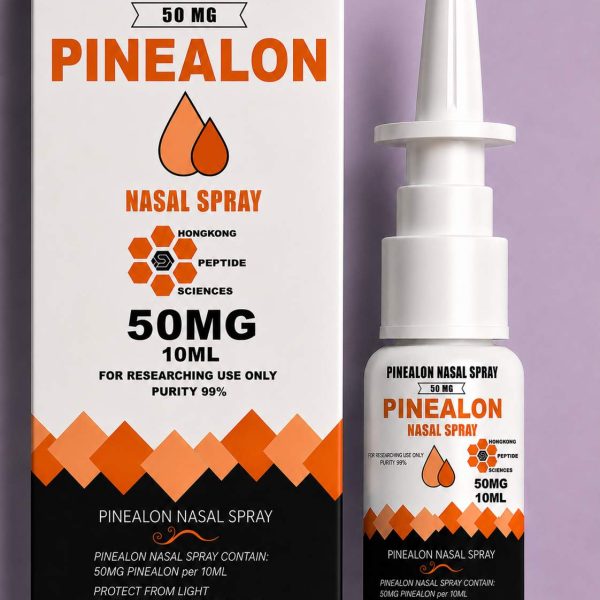
Pinealon nasal spray 50MG/10ml
Original price was: $200.00.$35.00Current price is: $35.00.Pinealon Nasal Spray 50mg/10ml
Price is base on 1 unit
All of our products and services listed in this website are for research or production use only, not for direct human use.
-
Pinealon 50MG
Original price was: $200.00.$31.00Current price is: $31.00.Pinealon 25MG
Price is base on 1 vial
All of our products and services listed in this website are for research or production use only, not for direct human use.
-
Pinealon 25MG
Original price was: $100.00.$23.50Current price is: $23.50.Pinealon 25MG
Price is base on 1 vial
All of our products and services listed in this website are for research or production use only, not for direct human use.
-
Pinealon 10MG
Original price was: $50.00.$12.10Current price is: $12.10.Pinealon 10MG
Price is base on 1 vial
All of our products and services listed in this website are for research or production use only, not for direct human use.
-
Pinealon 5MG
Original price was: $10.00.$6.80Current price is: $6.80.Pinealon 5MG
Price is base on 1 vial
All of our products and services listed in this website are for research or production use only, not for direct human use.
-
Pinealon 2MG
Original price was: $10.00.$3.40Current price is: $3.40.Pinealon 2MG
Price is base on 1 vial
All of our products and services listed in this website are for research or production use only, not for direct human use.
-
Pinealon 1MG
Original price was: $10.00.$1.80Current price is: $1.80.Pinealon 1MG
Price is base on 1 vial
All of our products and services listed in this website are for research or production use only, not for direct human use.
-
Pinealon 100MCG
Original price was: $10.00.$0.90Current price is: $0.90.Pinealon 100MCG
Price is base on 1 vial
All of our products and services listed in this website are for research or production use only, not for direct human use.